
How to Choose an Optometrist in Australia: A Complete Guide for Clearer Vision
Choosing an optometrist isn’t just about getting your eyes tested—it’s about trusting someone with one of your most important senses. In Australia, where eye care is both highly regulated and widely accessible, the challenge isn’t finding an optometrist—it’s choosing the right one for your needs.
Whether you’re booking your first eye test, upgrading your glasses, or managing a long-term eye condition, this guide walks you through everything Australians look for when searching for an optometrist—without the confusion.
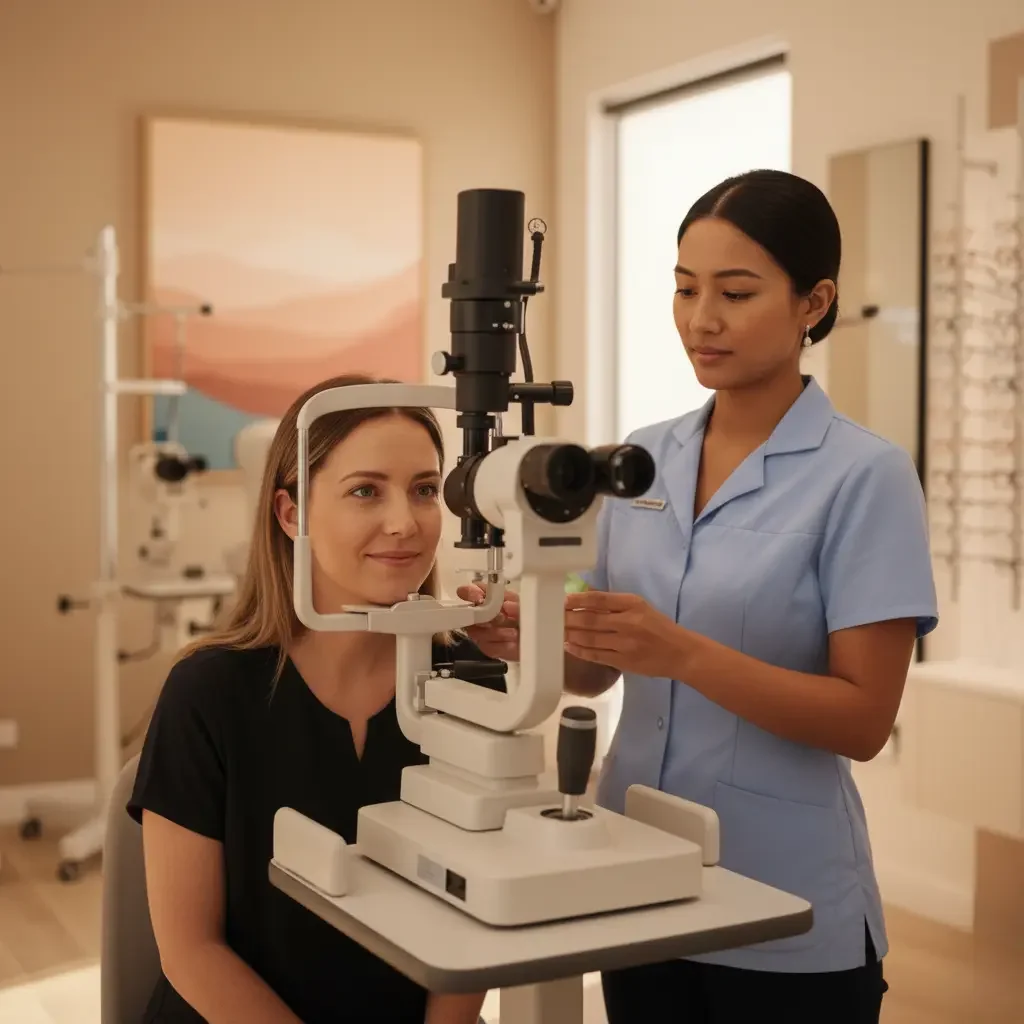
It usually begins with a small sign.
Headaches after work.
Text looking slightly blurry.
A child squinting at the TV.
You Google “optometrist near me”, scroll through listings, glance at reviews—and suddenly realise:
How do you actually choose the right optometrist?
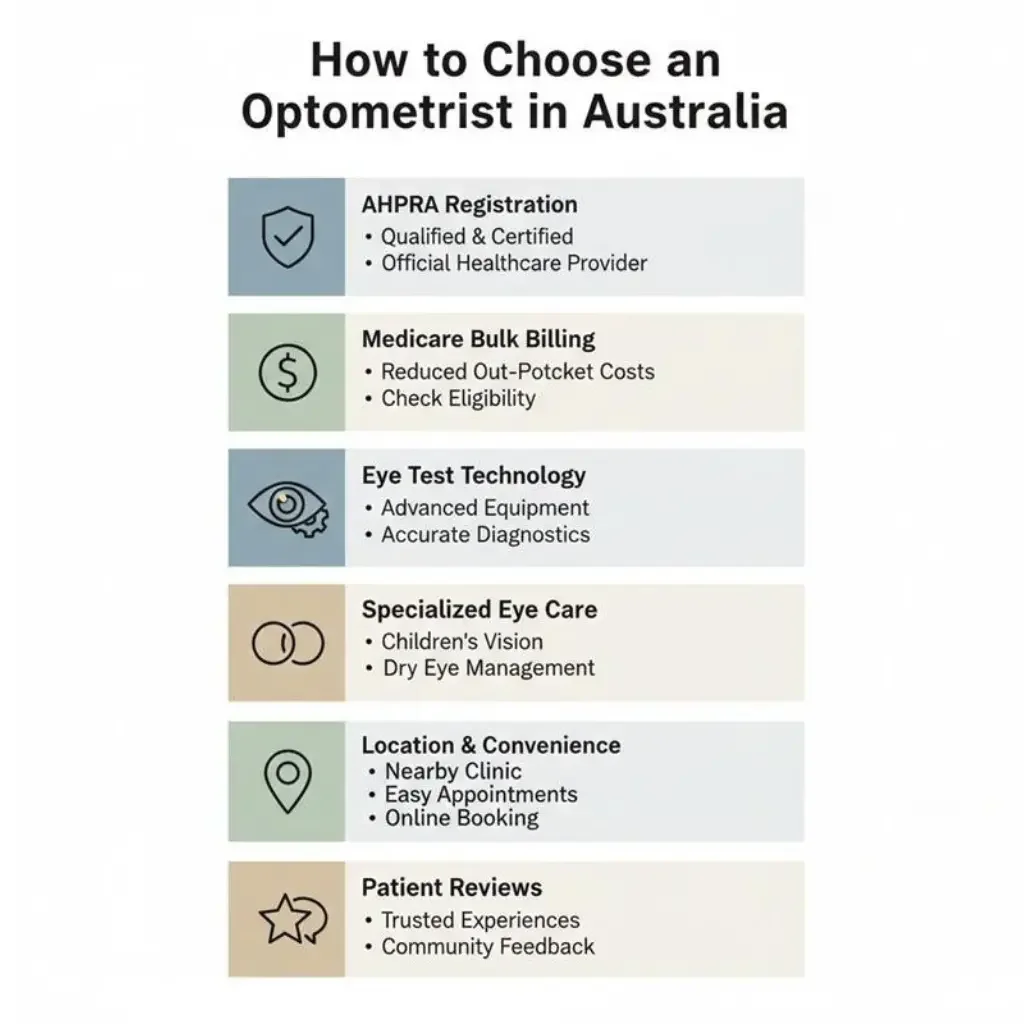
To choose an optometrist in Australia, ensure they are AHPRA-registered, offer Medicare bulk billing, use modern diagnostic technology, have experience with your specific eye care needs, and provide clear pricing. Reading patient reviews and choosing a conveniently located clinic also helps ensure ongoing eye health.
Let’s break it down step by step.
1. Understand What an Optometrist Does (Australia-Specific)
In Australia, optometrists are university-trained primary eye care professionals. They:
Conduct comprehensive eye tests
Prescribe glasses and contact lenses
Detect eye diseases like glaucoma, macular degeneration, and diabetic retinopathy
Refer patients to ophthalmologists when medical or surgical treatment is required
Unlike some countries, Australian optometrists are AHPRA-registered and follow strict clinical guidelines—so credentials matter.
2. Check AHPRA Registration (Non-Negotiable)

Before booking, always confirm the optometrist is registered with AHPRA (Australian Health Practitioner Regulation Agency).
Why this matters:
Ensures proper qualifications
Confirms ethical and clinical standards
Protects you as a patient
Tip: Most clinic websites mention this, but you can also verify directly on the AHPRA register.
3. Look for Bulk Billing & Medicare Coverage
One of the biggest search queries in Australia is:
“Is eye test free with Medicare?”
Here’s the answer:
Most optometrists bulk bill Medicare for standard eye tests
Adults: eligible every 3 years (or annually if medically necessary)
Children & seniors: often eligible every year
When choosing an optometrist, check:
Do they bulk bill Medicare?
Are advanced tests (like OCT scans) included or charged separately?
Transparency around costs is a strong sign of a trustworthy clinic.
4. Assess Technology & Testing Methods
Modern eye care goes far beyond reading letters on a chart.
Look for clinics that offer:
Digital retinal imaging
OCT scans for early disease detection
Dry eye assessments
Children’s vision testing tools
Why it matters:
Advanced technology helps detect eye conditions before symptoms appear—especially important for Australians over 40.
5. Experience with Your Specific Needs
Not all optometrists specialise in the same areas.
Choose based on your situation:
Children → Look for paediatric eye care experience
Contact lens wearers → Ask about fittings and specialty lenses
Diabetics → Ensure retinal screening expertise
Older adults → Experience with age-related eye conditions
A good optometrist doesn’t rush—they listen, explain, and personalise care.
6. Location, Convenience & Appointment Availability
Australians value convenience—but not at the cost of care.
Consider:
Clinic location (near home or work)
Weekend or evening appointments
Online booking options
Emergency or same-day slots
If eye care feels accessible, you’re more likely to stay consistent with check-ups.
7. Read Reviews (But Read Them Right)
Online reviews matter—but context matters more.
Look for patterns:
Mentions of thorough testing
Clear explanations from the optometrist
Friendly, non-pushy approach to glasses sales
Positive experiences with kids or seniors
🚩 Red flag: Multiple reviews mentioning rushed appointments or unclear pricing.
8. Frame & Lens Advice Without Pressure
A quality optometrist:
Explains lens options clearly
Matches frames to your prescription & lifestyle
Doesn’t oversell unnecessary upgrades
You should feel informed, not pressured.
5 Frequently Asked Questions (FAQs)
1. Are eye tests free in Australia?
Yes, most optometrists bulk bill Medicare for standard eye tests if you’re eligible, meaning no out-of-pocket cost.
2. How often should I see an optometrist?
Adults should have an eye test every 2–3 years, while children, seniors, and people with eye conditions may need annual check-ups.
3. What’s the difference between an optometrist and an ophthalmologist?
Optometrists provide primary eye care and vision correction. Ophthalmologists are medical doctors who perform eye surgery and treat complex conditions.
4. Can an optometrist detect serious eye diseases?
Yes. Australian optometrists are trained to detect conditions like glaucoma, macular degeneration, and diabetic eye disease early.
5. Do I need a referral to see an optometrist?
No referral is required. You can book directly with an optometrist.
Final Thought
Choosing an optometrist isn’t about finding the closest clinic—it’s about finding someone who sees you, not just your prescription.
The right optometrist helps you protect your vision today, so you can enjoy life clearly tomorrow.

Looking for a trusted optometrist near you? Platforms like Localeyez make it easier to discover verified optometrists across Australia—so you can compare clinics, check availability, and book eye care close to home with confidence.
