
Optometrist for Kids in Australia: Gentle, Trusted Eye Care for Young Eyes
Introduction: Why Early Eye Care for Kids Is Essential
It’s more common than parents realise — a child struggles to read the board at school, loses focus during homework, or sits too close to the TV. Many times, these behaviours aren’t signs of distraction… but vision problems that haven’t been detected yet.
Because kids don’t always know how to describe blurry vision, the responsibility falls on parents to ensure regular eye checks. And choosing the right children’s optometrist makes all the difference.
This guide helps parents understand when to book an eye test, what to look for in a kid-friendly clinic, and how to find the best optometrist for kids in Australia.
When Should You Take Your Child to the Optometrist?
Experts recommend a child’s first eye test between ages 3–4, even if no symptoms appear. This early check helps ensure proper visual development before they start school.
Key signs your child may need an eye test:
Squinting or rubbing their eyes frequently
Holding screens or books very close
Complaints of headaches or eye discomfort
Difficulty focusing in class
Wandering, crossed, or misaligned eyes
Struggling with reading or catching a ball
Early detection is the best defence against long-term eye issues, and regular exams help track changes as your child grows.
Qualities That Make a Great Kids’ Optometrist
Children need more than a standard optometrist — they need someone who understands how young eyes develop and how kids behave during tests.
Look for an optometrist who is:
✔ Friendly, patient, and great with kids
A calm, positive tone helps make the experience stress-free.
✔ Specialised in paediatric eye conditions
They should understand developmental vision issues and children’s eye milestones.
✔ Skilled in gentle, non-invasive testing techniques
Child-friendly equipment, fun visuals, and engaging communication make the test comfortable.
✔ Operating in a child-centric clinic environment
Bright, welcoming spaces help children feel relaxed during their exam.
What to Expect in a Kids’ Eye Test
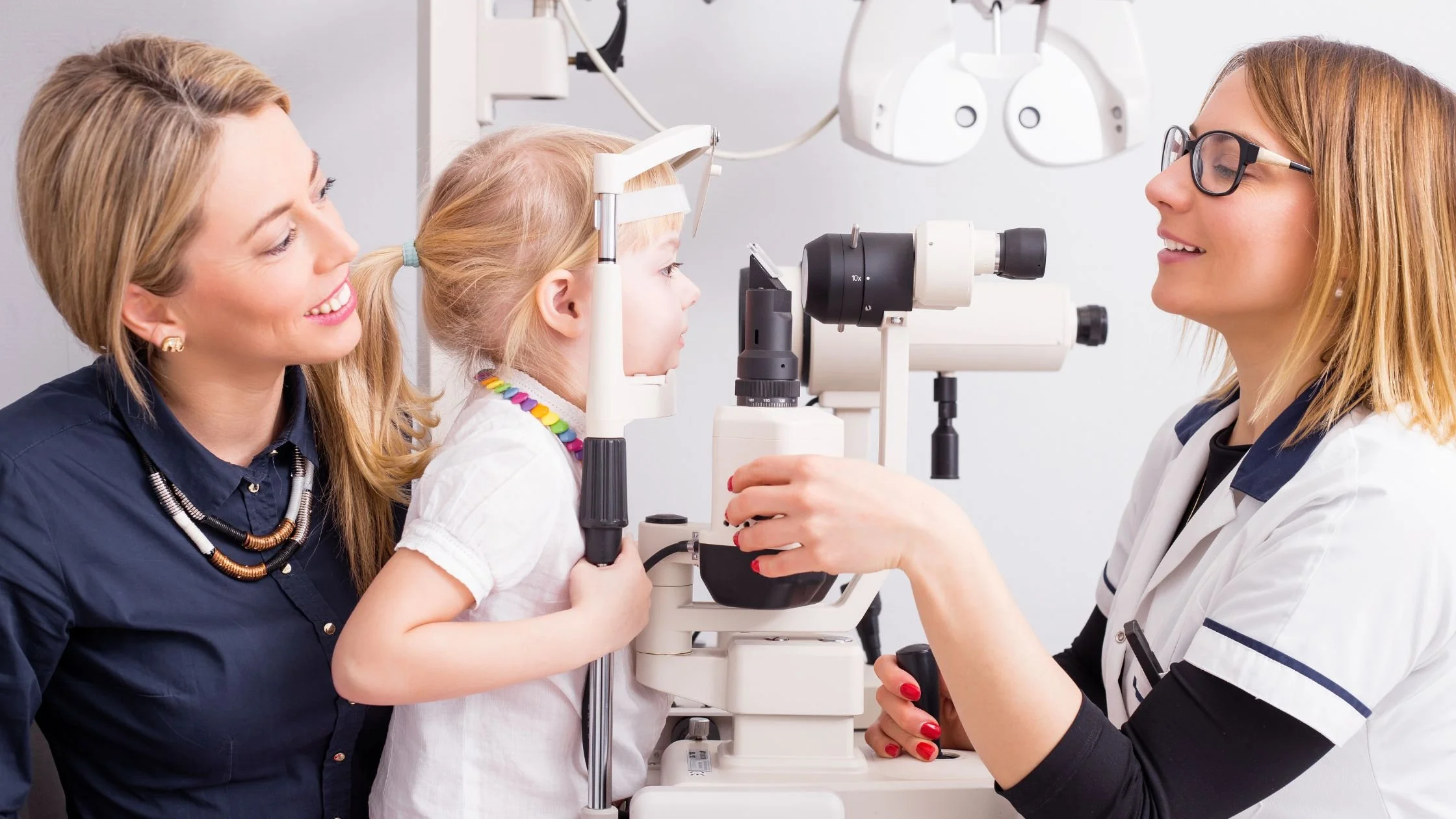
A children’s eye exam is thorough yet designed to feel easy and engaging.
Step-by-step overview:
Initial conversation — the optometrist asks parents about habits, symptoms, and school performance.
Visual acuity test — using shapes, letters, or symbols based on age.
Eye muscle and movement checks — to identify misalignment or tracking issues.
Focus and depth assessment — ensuring proper coordination between both eyes.
Light and retina examination — gentle, non-invasive internal eye checks.
Prescription assessment — determining if glasses are needed.
What parents should prepare:
Bring any previous reports, school feedback, or notes about their symptoms.
How optometrists engage kids:
Through games, colourful charts, friendly conversation, and breaks if needed — helping children stay comfortable and cooperative.
Common Eye Conditions in Children
Understanding common childhood eye conditions helps parents detect issues early.
✔ Myopia (short-sightedness)
Increasingly common due to screen time and low outdoor exposure.
✔ Amblyopia (lazy eye)
Occurs when one eye doesn’t develop proper vision — treatable when detected early.
✔ Strabismus (crossed or turned eyes)
Affects depth perception and coordination.
✔ Astigmatism
Causes blurred vision due to an irregularly shaped cornea.
✔ Digital Eye Strain
Frequent among kids using tablets, computers, and smartphones.
Regular eye exams help identify, manage, and often correct these conditions before they impact learning or development.
Optometrists in Australia for Kids
Explore independent, trusted children’s optometrists near you on LocalEyez.
How to Choose the Right Optometrist for Your Child
When selecting the best kids’ optometrist, consider:
✔ Pediatric expertise
Ensure they specialise in children’s eye care and have relevant training.
✔ Parent reviews and local recommendations
Look for consistent praise for patience, friendliness, and child comfort.
✔ Clinic access & appointment convenience
Flexible hours make follow-up visits easier.
✔ Search through trusted platforms
Use directories like LocalEyez to compare verified, independent optometrists.
Choosing the right practitioner ensures a positive experience and consistent long-term eye health.
Supporting Healthy Vision at Home
Eye care doesn’t stop at the clinic — parents can encourage habits that protect young eyes daily:
Healthy vision habits for kids:
Outdoor play for at least 90 minutes per day (reduces myopia risk)
Good lighting during reading or screen use
20-20-20 rule for screen time breaks (every 20 minutes, look 20 feet away for 20 seconds)
A healthy diet rich in vitamins A, C, E and omega-3 fatty acids
Regular eye exams even if no symptoms appear
Conclusion
Healthy eyes help children learn confidently, play safely, and thrive at home and school. Early eye care gives parents the reassurance that their child’s vision is developing normally — and if there’s an issue, it can be treated early.
Ready to find trusted, gentle care for your child?
Find the best optometrist for kids near you on LocalEyez and book a reliable children’s eye test today.
