
How to Clean Your Sunglasses and Glasses Without Damaging Them
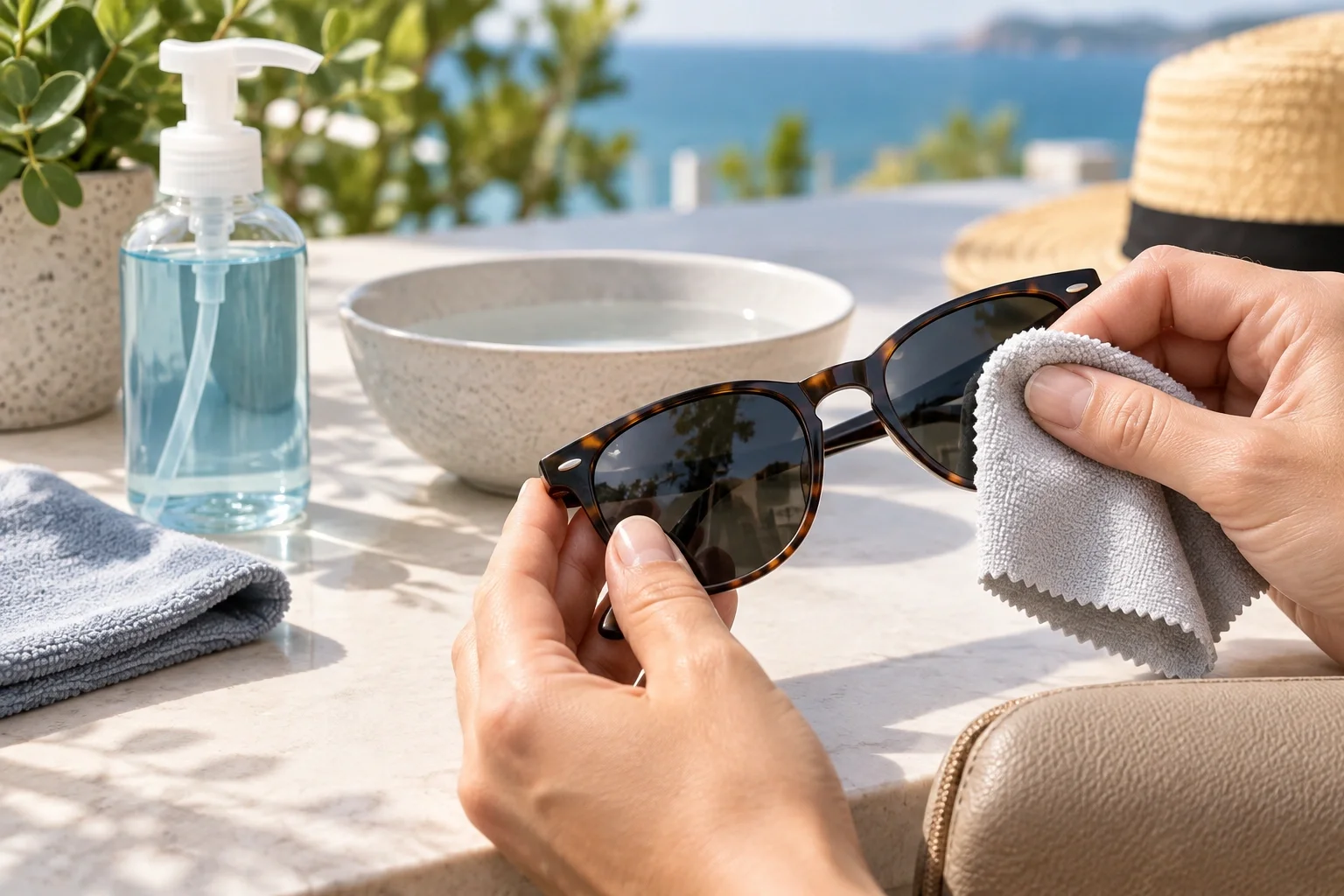
Dirty sunglasses are more than a cosmetic annoyance. Fingerprints, dust, sunscreen, sweat and salt can leave your lenses smeared and make it harder to see clearly.
The good news is that cleaning your glasses properly only takes a minute or two.
For most sunglasses and prescription glasses, the safest routine is simple: rinse away loose particles, clean gently, rinse again and dry with a clean microfibre cloth.
How to Clean Your Glasses: The 5-Step Method
1. Wash your hands first
Wash your hands with soap and water and dry them with a clean, lint-free towel.
This prevents the oils and dirt on your fingers from being transferred straight back onto your lenses.
2. Rinse the lenses before wiping
Hold the glasses by the frame and rinse the lenses gently with lukewarm water.
This step matters because wiping a dusty or sandy lens while it is dry can drag particles across the surface and create tiny scratches. ZEISS similarly recommends removing coarse dirt before wiping lenses.
Especially after the beach: rinse off sand and salt before touching the lenses with a cloth.
3. Use a small amount of mild dishwashing liquid when needed
For greasy fingerprints, sunscreen or heavier grime, use a tiny amount of mild, lotion-free dishwashing liquid.
Gently clean both sides of the lenses and the frame with your fingertips, then rinse thoroughly.
For everyday cleaning, a purpose-made lens cleaner labelled as safe for coated lenses is another option. Some Brands recommends pH-neutral washing-up liquid for thorough cleaning and lens-cleaning products for convenient care.
4. Dry with a clean microfibre cloth
Gently dry the lenses and frame using a clean microfibre lens cloth.
Avoid pressing hard. Let the cloth lift away remaining moisture rather than aggressively rubbing the surface.
A dirty microfibre cloth can simply transfer oils and particles back onto your lenses, so wash it regularly and avoid fabric softener, which can contribute to streaking.
5. Check the edges, nose pads and frame
Don't clean only the visible centre of the lenses.
Sweat, sunscreen and skin oils commonly accumulate around:
Nose pads
The bridge
Lens edges
Hinges
Temple arms
Cleaning these areas regularly can help keep your sunglasses comfortable and prevent grime from building up.
What Should You Never Use to Clean Sunglasses?
Some of the most convenient cleaning methods are actually the ones most likely to cause problems.
Avoid:
Shirt sleeves or clothing – fibres and trapped dirt can scratch lenses.
Paper towels or tissues – they can leave fibres and may drag particles across the lens.
Dirty microfibre cloths – trapped grit can cause fine scratches.
Household glass cleaner – it is not formulated for eyewear lenses and may damage lens materials or coatings.
Harsh household detergents – stronger formulas may affect lens coatings.
Abrasive cleaners or scrubbing materials.
Alcohol or solvents unless the eyewear manufacturer specifically says they are safe.
How to Clean Sunglasses After Sunscreen, Sweat or a Day at the Beach
Sunglasses often need more than a quick wipe during summer.
Sunscreen: Rinse first, then use mild dishwashing liquid or an eyewear-safe cleaner to remove the oily film.
Sweat: Clean the lenses as well as the nose pads and frame, where salt and oils can accumulate.
Beach sand: Never immediately rub a sandy lens with a dry cloth. Rinse it first to remove loose particles.
Salt water: Rinse your sunglasses with fresh water after exposure to seawater and dry them with a clean microfibre cloth. Clearly also recommends rinsing glasses after hot days because sunscreen, salt water and other substances left to dry on lenses can affect coatings over time.
What About Polarised or Coated Sunglasses?
Polarised lenses can be cleaned using the same basic gentle method, but avoid abrasive materials and harsh chemicals.
The important point is not to assume that because a lens is scratch-resistant, it is scratch-proof. Modern lenses can have multiple treatments and coatings, and improper cleaning can damage their surface. ZEISS notes that even coated lenses can still be scratched and that existing scratches cannot simply be cleaned away.
If your sunglasses have a specialist coating, anti-fog treatment, mirror finish or electronic features, check the manufacturer's cleaning instructions first.
What about smart sunglasses?
Smart sunglasses can have cameras, microphones, charging contacts and other electronic components that ordinary sunglasses do not.
For example, Sunglass Hut's Australian guidance for Oakley Meta and Ray-Ban Meta glasses recommends a dampened cloth and mild soap while specifically advising against solvents, alcohol and running water.
Follow the manufacturer's instructions rather than automatically applying a standard glasses-cleaning routine.
How Often Should You Clean Your Glasses?
There is no single cleaning schedule that works for everyone.
A practical approach is:
Quick clean: whenever fingerprints or smudges interfere with clear vision.
Thorough clean: whenever you notice sunscreen, sweat, grease or accumulated dirt.
After the beach: rinse them as soon as practical.
Microfibre cloth: wash regularly so it doesn't become a source of dirt.
If your glasses constantly become greasy or difficult to clean even after proper washing, the problem may be the cloth, cleaning product or lens coating rather than the cleaning technique.
Can Scratches on Sunglasses Be Removed?
No. Cleaning cannot remove scratches from a lens.
Polishing or using abrasive household products may make the situation worse by altering the lens surface or coating.
If scratches are affecting your vision, causing distracting reflections or making the lenses look permanently hazy, an optometrist or optical professional can assess whether the lenses should be replaced. ZEISS confirms that scratches cannot simply be wiped away from either plastic or glass lenses.
The Best Way to Keep Your Glasses Clean Longer
Good storage is part of lens care.
When you aren't wearing your sunglasses:
Put them in a protective case rather than loose in a bag or car.
Keep the lenses facing upward if you temporarily put them down.
Use a clean microfibre cloth.
Don't store them where they can be exposed to excessive heat.
Don't place them lens-down on hard surfaces.
A clean case matters too. There is little benefit in carefully cleaning your sunglasses and then putting them into a dusty case.
When Should You See an Optometrist?
Cleaning can remove dirt and smudges, but it cannot fix damaged lenses, loose frames or persistent vision problems.
If your sunglasses are scratched, distorted, uncomfortable, loose or no longer providing the visual quality you expect, consider having them checked by an optometrist.
You can use LocalEyez to find a nearby optometrist and explore eyewear options through Lookbook.
For inspiration when choosing a new pair, explore the latest eyewear trends on Lookbook.
The Simple Rule to Remember
Rinse first. Clean gently. Use the right cloth. Avoid harsh products. Store your glasses properly.
You don't need an elaborate cleaning routine to protect your sunglasses. The biggest improvement usually comes from avoiding the common mistake of wiping dust, sand or dried sunscreen across a lens with a shirt or tissue.
With the right technique, your sunglasses can stay clearer, cleaner and more comfortable for longer.
FAQs
Can I clean my sunglasses with water?
Yes. Lukewarm water is useful for removing loose dust and particles before cleaning. For greasy or heavily soiled lenses, use a small amount of mild dishwashing liquid or an eyewear cleaner that is suitable for your lens type.
Can I use dish soap to clean my glasses?
A small amount of mild, lotion-free dishwashing liquid can be used on many standard spectacle and sunglass lenses. Rinse thoroughly afterwards. However, follow the manufacturer's instructions if your lenses have a specialist coating or treatment. ZEISS recommends pH-neutral washing-up liquid for thorough lens cleaning.
Is it OK to clean glasses with a shirt?
No. Clothing can contain dust, fibres and particles that may scratch the lens when rubbed across the surface. Use a clean microfibre lens cloth instead.
How do I clean sunglasses after the beach?
First rinse away sand and salt with fresh, lukewarm water. Then gently clean the lenses and frame with mild soap or an eyewear-safe lens cleaner and dry them with a clean microfibre cloth. Avoid rubbing a sandy lens while it is dry.
Can I use glass cleaner on sunglasses?
No. Household glass cleaner is designed for household glass and is not an appropriate general-purpose cleaner for sunglasses. It may damage lens materials or coatings. Use a lens-cleaning product designed for eyewear or the cleaning method recommended by the manufacturer.