
Eyeglass Measurement Guide: How to Measure Glasses Correctly in Australia
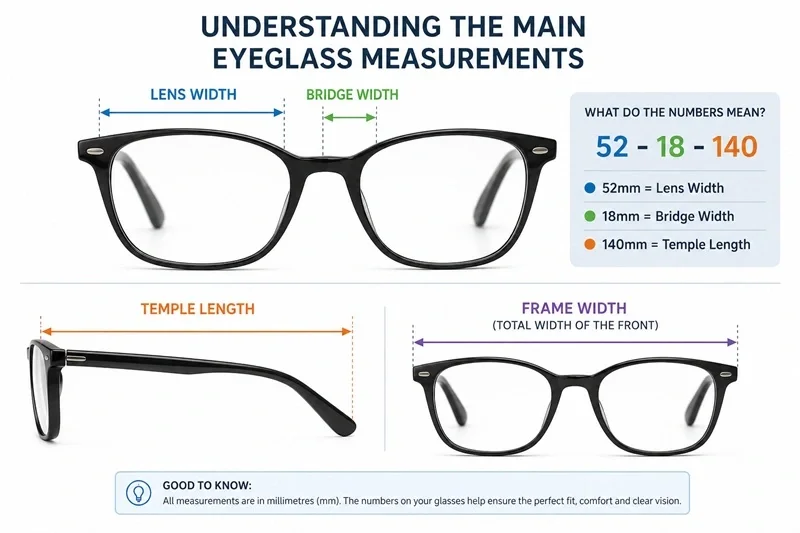
Eyeglass measurements usually include lens width, bridge width, temple length, and pupillary distance (PD). These measurements help ensure your glasses fit comfortably and provide clear vision. In Australia, most frame measurements are written inside the temple arm in a format like 52-18-140, where 52mm is lens width, 18mm is bridge width, and 140mm is temple length.
Complete Eyeglass Measurement Guide for Australians
Buying glasses online has become more popular than ever in Australia. But one thing still confuses many people — eyeglass measurements. If you’ve ever seen numbers like 52-18-140 printed inside your glasses and wondered what they mean, this guide explains everything in simple terms.
Understanding eyeglass measurements helps you choose frames that fit comfortably, improve vision, and suit your face shape. Whether you’re shopping online or replacing an old pair, accurate measurements are essential.
In this complete guide, we’ll cover:
Standard eyeglass measurements
How to measure glasses at home
Pupillary distance (PD)
Frame sizing tips
Kids vs adult sizing
Common fitting mistakes
Australian optical fitting advice
What Are Eyeglass Measurements?
Eyeglass measurements are the dimensions used to describe the size and fit of eyeglass frames. These measurements ensure your glasses sit properly on your face without slipping, pinching, or causing discomfort.
Most eyeglasses include three main measurements:
Lens Width
Bridge Width
Temple Length
Example:
52-18-140
This means:
52mm lens width
18mm bridge width
140mm temple length
These numbers are usually printed on the inside of the glasses arm.
Understanding the Main Eyeglass Measurements
1. Lens Width
Lens width refers to the horizontal width of each lens in millimetres.
Typical sizes:
Small frames: 48–50mm
Medium frames: 51–54mm
Large frames: 55mm+
Wider lenses usually suit broader faces, while smaller lenses suit narrow faces.
2. Bridge Width
The bridge width measures the distance between the two lenses — the part resting on your nose.
Typical range:
14mm–24mm
A bridge that’s too narrow can pinch your nose, while one that’s too wide may cause glasses to slide down.
3. Temple Length
Temple length is the measurement of the arms extending over your ears.
Common lengths:
135mm
140mm
145mm
150mm
Longer temples generally suit larger heads.
What Is Pupillary Distance (PD)?
Pupillary Distance (PD) measures the distance between the centres of your pupils.
This is one of the most important measurements when ordering prescription glasses online because it ensures lenses align correctly with your eyes.
Average PD in Australia:
Adults: 54–74mm
Children: 41–55mm
You can ask your optometrist for your PD or measure it yourself using a ruler and mirror.
For more help understanding your prescription details, read:
How to Read Your Glasses & Contact Lens Prescription Australia Guide:
Method 1: Check Existing Glasses
The easiest method is checking the inside arm of your current glasses.
Example:
54□18 145
This means:
Lens Width: 54mm
Bridge Width: 18mm
Temple Length: 145mm
If your current glasses fit perfectly, use similar measurements when buying new frames.
Method 2: Use a Ruler
If the numbers are missing:
Measure lens width horizontally
Measure bridge width between lenses
Measure temple arm from hinge to end
Measure frame width across the front
Always measure in millimetres.
Frame Width Explained (The Missing Detail Most Guides Ignore)
Many competitor articles fail to explain overall frame width, even though it significantly affects comfort.
Frame width measures the total horizontal width of the glasses front.
General guide:
Narrow face: under 129mm
Medium face: 130–139mm
Wide face: 140mm+
If your glasses constantly slide or squeeze your temples, frame width is often the issue.
How to Know If Your Glasses Fit Correctly
A properly fitted pair of glasses should:
Sit level on your face
Not slide down your nose
Not pinch your temples
Rest comfortably behind ears
Align with your pupils
Poor-fitting glasses may cause:
Headaches
Pressure marks
Blurred vision
Eye strain
Australian Face Shapes and Eyeglass Sizing
Australians shop for many different frame styles depending on face shape and fashion trends.
Popular frame trends currently include oversized acetate frames, transparent frames, and retro-inspired eyewear.
Explore the latest Australian eyewear trends
Kids Eyeglass Measurements
Children’s glasses use the same measurement system but with smaller dimensions.
Typical children’s sizes:
Lens Width: 40–48mm
Bridge: 14–18mm
Temple Length: 115–135mm
Kids’ glasses should fit securely without excessive pressure because children move frequently during school and sports.
How to Measure Pupillary Distance (PD) at Home
Single PD Method
Stand in front of a mirror
Hold a millimetre ruler across your nose
Measure from centre of one pupil to the other
Some prescriptions use separate measurements for each eye.
This method improves lens alignment accuracy for stronger prescriptions.
Online Glasses Shopping Tips in Australia
When buying glasses online:
Compare measurements with your existing frames
Check return policies
Verify PD accuracy
Choose adjustable nose pads if unsure
Read sizing charts carefully
Many Australians now use online optical services combined with local fitting support.
If you’re searching for professional eye care assistance, visit:
Common Eyeglass Measurement Mistakes
Ignoring PD
Incorrect PD causes blurry vision and eye fatigue.
Choosing Style Over Fit
Fashionable frames still need proper sizing.
Assuming All Medium Frames Are Equal
Frame measurements vary between brands.
Forgetting Face Width
Overall frame width matters just as much as lens size.
Should You Visit an Optometrist for Measurements?
While home measuring works for many people, professional measurements are always more accurate.
An optometrist can help with:
PD measurement
Frame fitting
Prescription accuracy
Lens recommendations
Learn how to choose the right eye care professional
Best Eyeglass Frame Size by Face Shape
Round Face
Best frames:
Rectangular
Square
Angular
Square Face
Best frames:
Round
Oval
Thin metal frames
Oval Face
Most frame styles suit oval faces.
Heart-Shaped Face
Best frames:
Rimless
Light-coloured frames
Oval frames
Why Accurate Eyeglass Measurement Matters
Correct eyeglass measurements improve:
Visual clarity
Comfort
Lens positioning
Appearance
Long-term wearability
Small measurement differences can dramatically affect comfort, especially for all-day wear.
Final Thoughts
Understanding eyeglass measurements makes buying glasses far easier and more accurate. Whether you’re ordering prescription glasses online or shopping in-store in Australia, knowing your frame size, bridge width, temple length, and PD helps ensure the perfect fit.
Always compare measurements with an existing comfortable pair and seek professional help if you experience discomfort or vision problems.
Properly fitted glasses don’t just improve vision — they improve daily comfort and confidence too.
FAQs
What do the numbers on eyeglasses mean?
The numbers represent:
Lens width
Bridge width
Temple length
Example:
52-18-140 means:
52mm lens width
18mm bridge
140mm temple length
How do I know my eyeglass size?
Check the inside arm of your current glasses or measure them manually using a ruler.
What is a normal pupillary distance?
Average adult PD ranges between 54mm and 74mm.
Can I measure my PD myself?
Yes. You can use a mirror and millimetre ruler, though professional measurements are usually more accurate.
Are online glasses measurements accurate?
Yes, if you provide accurate frame size and PD measurements.
What happens if my glasses measurements are wrong?
Incorrect measurements can cause:
Eye strain
Headaches
Slipping glasses
Poor vision alignment
Is frame width important?
Yes. Overall frame width greatly affects comfort and stability.
Can an optometrist adjust glasses after purchase?
Yes. Most optometrists can adjust frame fitting even if purchased online.