
How to Read Your Glasses & Contact Lens Prescription (Australia Guide)
Ever looked at your eye test results and thought, “What do all these numbers even mean?” You’re not alone. Learning how to read a glasses prescription can feel confusing at first — especially when abbreviations like SPH, CYL, and AXIS are involved.
This guide breaks it all down in plain English, with examples tailored for Australians. By the end, you’ll know exactly how to read your glasses prescription in Australia and what each value means for your vision.
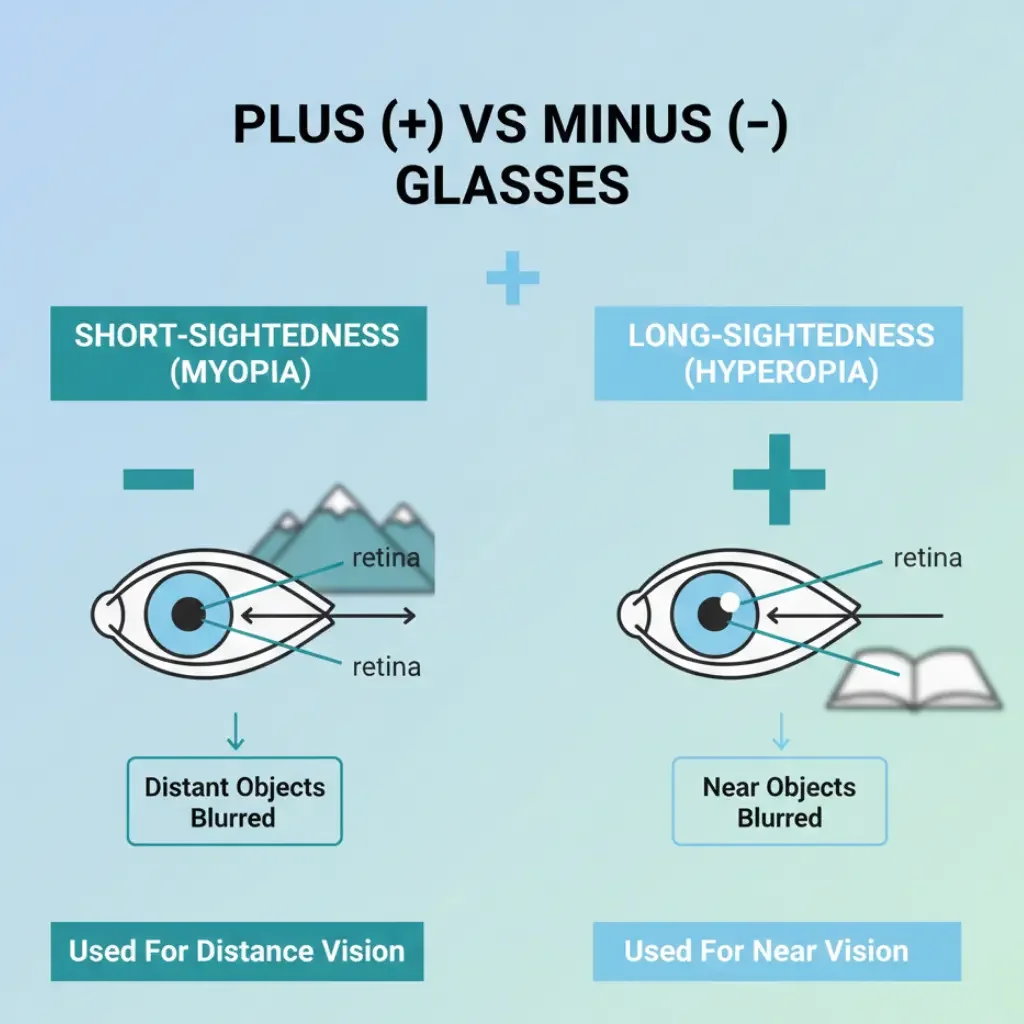
A glasses prescription shows how your eyes focus light and includes values for sphere (SPH), cylinder (CYL), axis, and sometimes ADD.
Negative numbers (-) correct short-sightedness
Positive numbers (+) correct long-sightedness
Higher numbers mean stronger correction
What a Glasses Prescription Looks Like
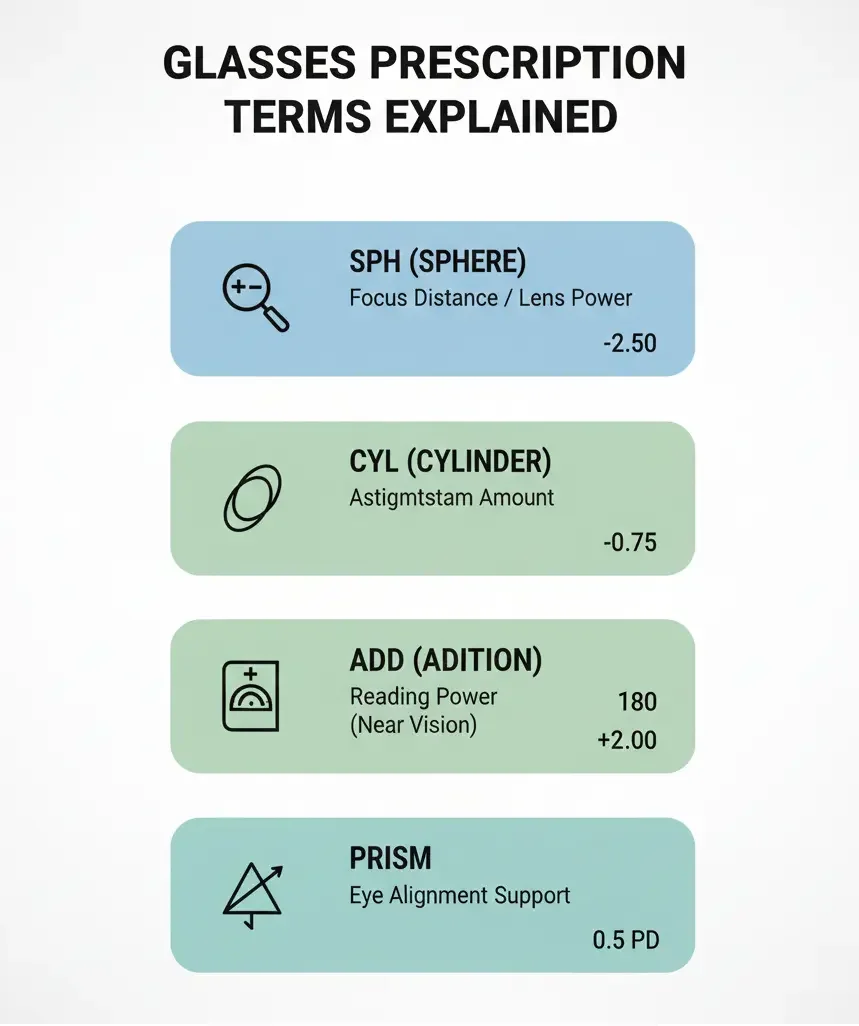
Your prescription is usually displayed in a table, one row for each eye:
| Term | Right Eye (OD) | Left Eye (OS) |
|---|---|---|
| SPH | -1.50 | -1.25 |
| CYL | -0.75 | -0.50 |
| AXIS | 180 | 170 |
| ADD | +1.50 | +1.50 |
Let’s decode what each part means.
OD and OS: Right Eye vs Left Eye
OD (Oculus Dexter) → Right eye
OS (Oculus Sinister) → Left eye
OU (Oculus Uterque) → Both eyes
These labels simply tell you which eye each measurement applies to.
SPH (Sphere): Near- or Far-Sightedness
SPH shows how strong your main vision correction is.
Minus (-) = short-sighted (myopia)
Plus (+) = long-sighted (hyperopia)
Example:
-2.00 = mild to moderate short-sightedness
+1.25 = mild long-sightedness
The further the number is from zero, the stronger the lens required.
CYL (Cylinder): Astigmatism Correction
CYL appears only if you have astigmatism (uneven curvature of the eye).
Measured in plus or minus values
Indicates how much correction is needed
No CYL value? That usually means no astigmatism correction is required.
AXIS: Direction of Astigmatism
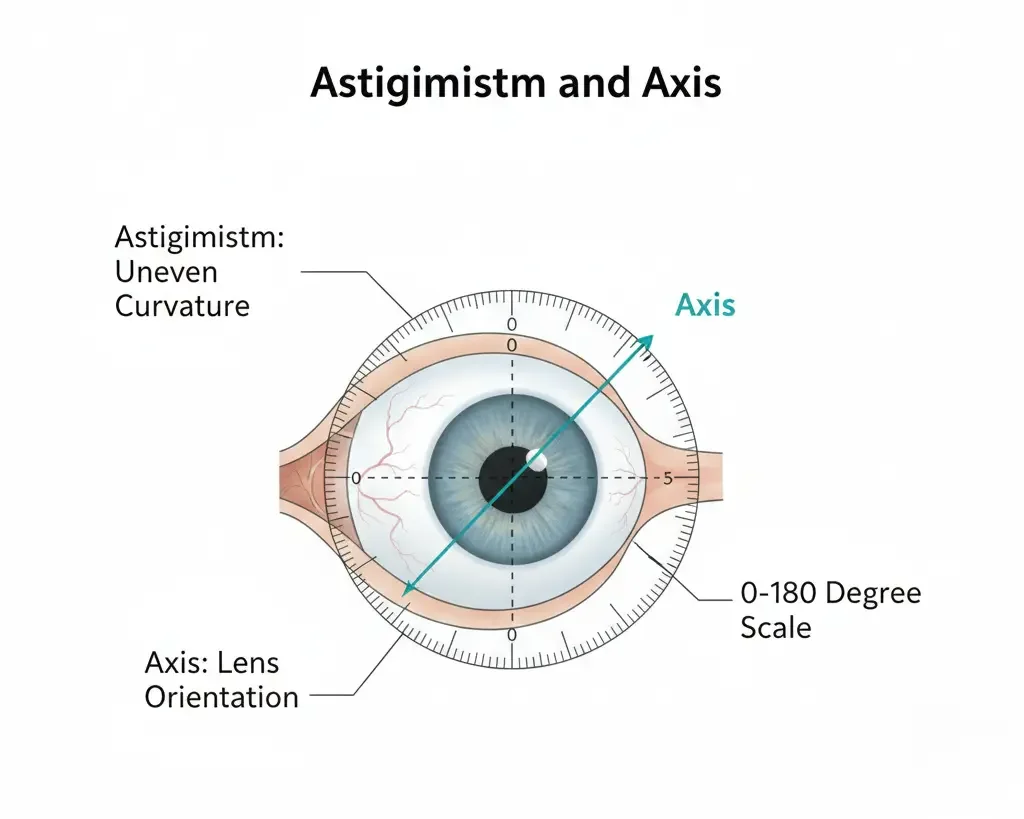
AXIS works together with CYL and ranges from 1 to 180 degrees.
It doesn’t affect lens strength — it simply tells the lab where the astigmatism correction should be placed on the lens.
ADD: Reading or Multifocal Power
ADD is extra magnification used for:
Reading glasses
Bifocals
Progressive lenses
Common in Australians over 40 experiencing presbyopia.
Example:
If your SPH is -1.50 and ADD is +2.00, your reading power becomes +0.50.
Prism & Base (If Included)
Some prescriptions include:
Prism – corrects eye alignment issues
Base – shows prism direction (in, out, up, down)
These are less common and typically prescribed for eye strain or double vision.
How to Read a Contact Lens Prescription
Contact lens prescriptions are separate from glasses prescriptions.
They may include:
BC (Base Curve) – how curved the lens is
DIA (Diameter) – lens size
Brand name – contact lenses are medical devices
You can’t substitute glasses numbers directly for contacts — fitting matters.
Is a Glasses Prescription the Same in Australia?
Yes. If you’re wondering how to read a glasses prescription in Australia, the format is the same as the UK and most countries worldwide.
Australian prescriptions typically:
Use dioptres (D)
Are valid for glasses only (unless stated)
May include PD (Pupillary Distance) separately
How Long Is a Glasses Prescription Valid in Australia?
Adults: usually 2 years
Children: often 1 year
Always check the expiry date before ordering new glasses.
Common Mistakes People Make When Reading Prescriptions
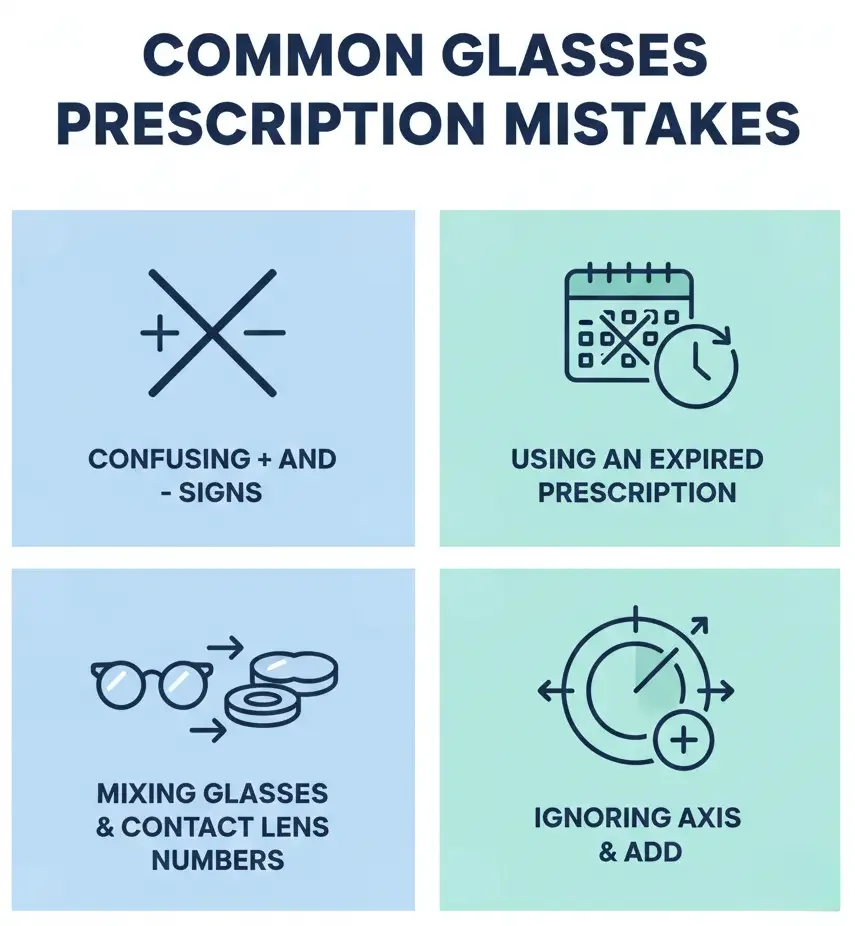
Confusing + and – signs
Assuming contacts and glasses prescriptions are interchangeable
Ignoring AXIS or ADD values
Using expired prescriptions
If in doubt, always double-check with your optometrist.
FAQs: How to Read Glasses Prescriptions
1. What does a negative number mean on a glasses prescription?
It means you’re short-sighted and need help seeing distant objects clearly.
2. Can I order glasses online using my prescription?
Yes — as long as it’s valid and includes all values like SPH, CYL, and AXIS.
3. Why is my contact lens prescription different?
Contacts sit directly on the eye, so size, curvature, and brand matter.
4. What if my prescription doesn’t include CYL?
You likely don’t need astigmatism correction.
5. Do I need a new eye test if my vision feels fine?
Yes. Vision can change gradually, and eye tests also check eye health.
Final Thoughts
Understanding how to read your glasses prescription empowers you to make smarter choices — whether you’re buying glasses online, switching lenses, or just staying informed about your eye health.
If you ever feel unsure, a quick chat with your optometrist can clear things up and ensure your vision stays crystal clear.
Find an Optometrist Near You with LocalEyez
Now that you understand how to read your glasses and contact lens prescription, the next step is making sure it’s reviewed by a qualified professional.
If you’re looking for an optometrist near me, LocalEyez helps you easily connect with trusted eye care clinics across Australia. Whether you need a routine eye test, new glasses, or contact lens advice, you can find experienced optometrists who understand your vision needs and provide personalised care.
Take the guesswork out of eye care — visit LocalEyez to find an optometrist near you and book with confidence.
