
Contacts vs Glasses: Which Is Better for You?
Choosing between contact lenses and glasses isn’t just about vision correction — it’s about comfort, lifestyle, confidence, and eye health.
Some people love the convenience of contacts. Others prefer the ease of glasses. And many use both.
In this comprehensive guide, we break down the pros, cons, costs, safety factors, and expert recommendations so you can make the right choice for your eyes.
Contacts vs Glasses – What’s the difference?
Glasses sit on your face and correct vision externally. They’re low-maintenance, safe, and easy to use.
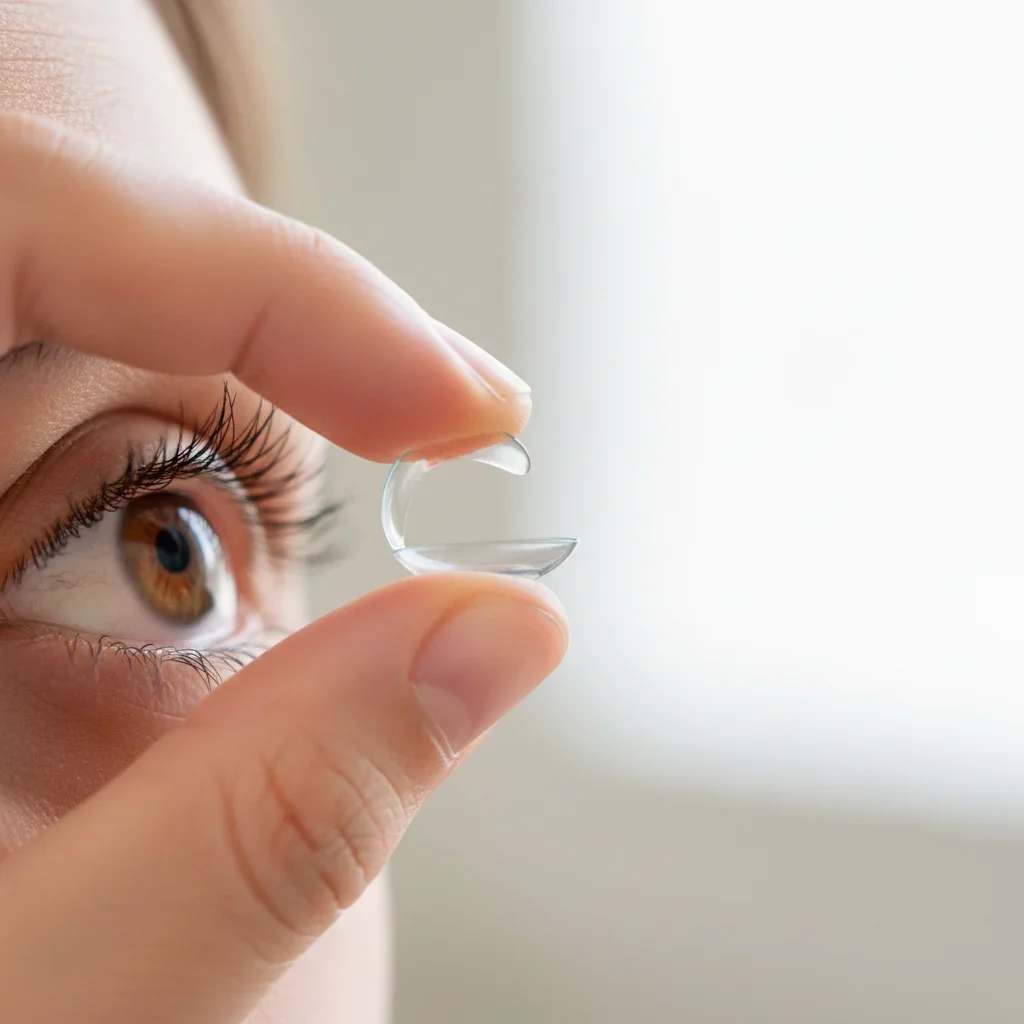
Contact lenses sit directly on the eye. They provide natural vision, are great for sports, but require strict hygiene.
Best choice depends on lifestyle, eye health, budget, and comfort.
Many optometrists recommend having both for flexibility and eye health balance.
Also read: How Do Multifocal and Bifocal Contact Lenses Work
Contacts vs Glasses Explained
What are glasses?
Glasses use prescription lenses mounted in frames to correct refractive errors like short-sightedness, long-sightedness, and astigmatism.
What are contact lenses?
Contact lenses are thin, curved lenses placed directly on the surface of the eye to correct vision.
Who should consider glasses?
Children
People with dry eyes
Anyone wanting low maintenance
Those prone to eye infections
Who should consider contacts?
Athletes
Active professionals
People who dislike frames
Those wanting a wider field of vision
When should you choose one over the other?
Long screen hours → glasses may be better
Special events or sports → contacts may be ideal
Why does it matter?
Your choice impacts eye comfort, long-term eye health, costs, and convenience.
Glasses: Pros and Cons

Advantages of Glasses
1. Low Maintenance
No daily insertion or removal routine.
2. Safer for Eye Health
Lower risk of infections compared to contact lenses.
3. Cost-Effective Long-Term
One pair can last 1–2 years.
4. Eye Protection
Acts as a barrier against dust, wind, and debris.
5. Fashion Accessory
Frames enhance personal style and professional presence.
Also read: The Best Clear Frame Glasses
Disadvantages of Glasses
Can fog up in humidity
May slide during exercise
Limited peripheral vision
Can feel heavy or leave nose marks
Contact Lenses: Pros and Cons
Advantages of Contacts
1. Natural Field of Vision
No frame blocking peripheral view.
2. Great for Sports & Active Lifestyles
3. No Fogging Issues
4. Cosmetic Flexibility
No frame changing facial appearance.
Disadvantages of Contacts
Higher risk of infection if hygiene is poor
Can worsen dry eye symptoms
Ongoing monthly cost
Not ideal for long screen exposure without breaks
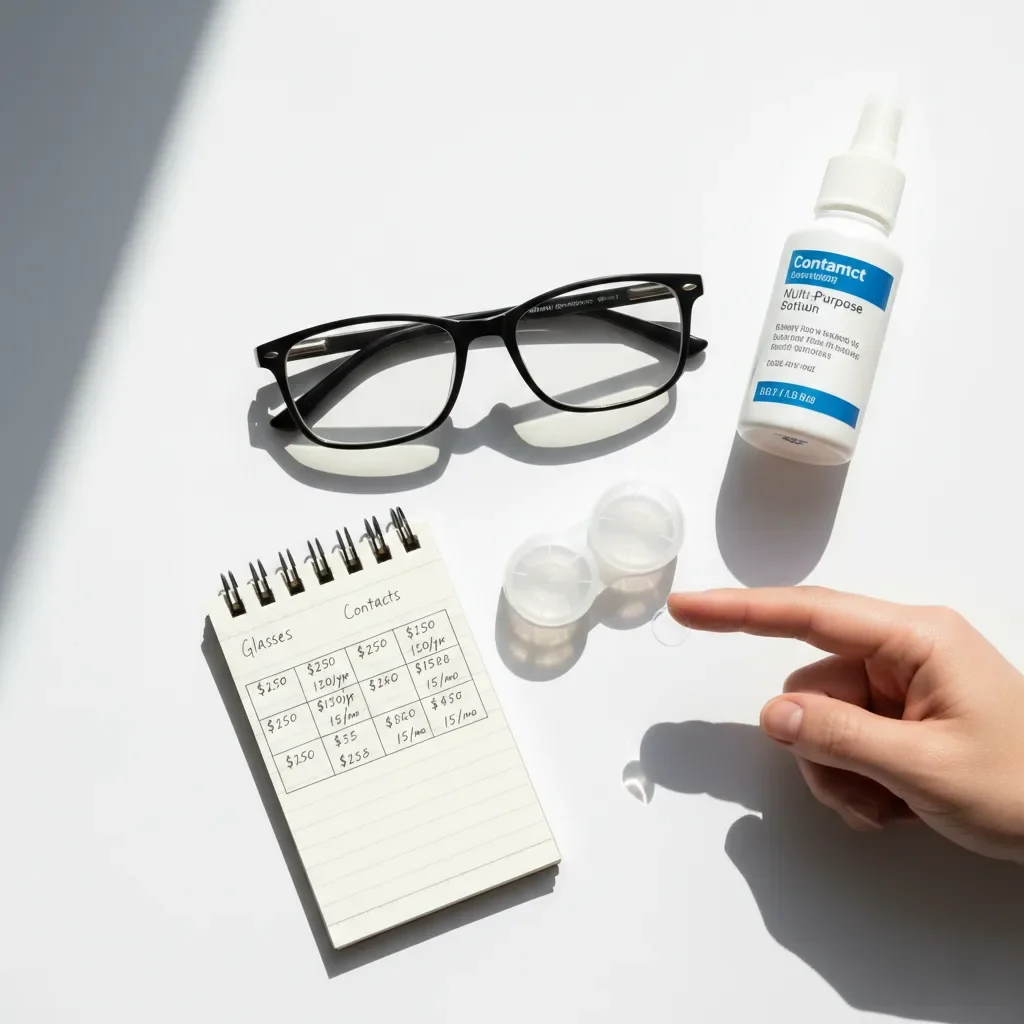
Cost Comparison: Contacts vs Glasses
| Factor | Glasses | Contact Lenses |
|---|---|---|
| Initial Cost | Higher upfront | Lower upfront |
| Ongoing Cost | Low | Monthly / ongoing |
| Maintenance | Minimal | Solutions, replacements |
| Replacement Cycle | 1–2 years | Daily / Monthly |
Over 2–3 years, contacts often cost more than glasses.
Also read: How to Read Your Glasses & Contact Lens Prescription
Eye Health: What Do Experts Recommend?
Eye care professionals generally suggest:
Avoid wearing contacts for more than 10–12 hours daily.
Never sleep in lenses unless prescribed.
Replace lenses as directed.
Always keep a backup pair of glasses.
For people with dry eyes, allergies, or frequent screen use, glasses are usually safer.
Lifestyle-Based Recommendation
Choose Glasses If:
You work long hours on screens
You prefer low maintenance
You have sensitive eyes
You’re buying for a child
Choose Contacts If:
You’re active or athletic
You dislike frames
You attend events or travel frequently
You want full peripheral vision
Best Solution?
Many people use both — contacts during the day and glasses at night.
Contacts vs Glasses: Side-by-Side Summary
| Category | Winner |
|---|---|
| Convenience | Glasses |
| Sports & Activities | Contacts |
| Long-Term Cost | Glasses |
| Natural Vision | Contacts |
| Eye Health Safety | Glasses |
FAQs: Contacts vs Glasses
1. Are contact lenses better than glasses?
Not necessarily. Contacts offer better peripheral vision, but glasses are safer and easier to maintain.
2. Can I switch between contacts and glasses?
Yes. In fact, many optometrists recommend alternating to reduce eye strain.
3. Are contacts safe for daily use?
Yes, if worn properly with strict hygiene and regular eye check-ups.
4. Do glasses weaken your eyes?
No. Glasses correct vision; they don’t weaken your eyes.
5. Are contact lenses more expensive?
Generally, yes. Monthly or daily replacements increase long-term cost.
6. Can children wear contact lenses?
Some older children and teens can, but glasses are usually preferred for younger kids.
Final Verdict: Which Should You Choose?
There’s no universal winner in the contacts vs glasses debate.
It depends on:
Your lifestyle
Your eye health
Your budget
Your comfort preference
The smartest approach?
Have both options available and consult an eye care professional to determine what’s safest for your specific prescription.