
Dry Eye Treatment in Australia: Causes, Symptoms, Best Treatments & When to See an Optometrist
Dry eye treatment focuses on restoring healthy tears, reducing inflammation, and improving tear quality. Treatment may include lubricating eye drops, warm compresses, eyelid hygiene, prescription medications, IPL therapy, punctal plugs, dietary changes, and lifestyle adjustments. An Australian optometrist can recommend the most suitable treatment based on the cause of your dry eyes.
Dry Eye Treatment in Australia: Everything You Need to Know
Dry, irritated eyes can make reading, driving, working on a computer, or even enjoying time outdoors uncomfortable. While many people assume dry eye is simply caused by spending too much time looking at screens, it is actually a complex eye condition that affects the quality and quantity of your tears.
Dry eye disease is one of the most common reasons Australians visit an optometrist, particularly as screen use increases, the population ages, and environmental conditions become harsher.
The good news is that modern dry eye treatment has advanced significantly over the past decade. From simple artificial tears to advanced in-clinic therapies like IPL (Intense Pulsed Light) treatment, there are now many effective ways to relieve symptoms and improve long-term eye health.
This comprehensive guide explains everything Australians need to know about dry eye treatment, including symptoms, causes, diagnosis, treatment options, costs, prevention, and when professional care is necessary.
What Is Dry Eye?
Dry eye disease occurs when your eyes cannot produce enough healthy tears or when tears evaporate too quickly.
Healthy tears contain three important layers:
Oil layer
Water layer
Mucus layer
These layers work together to keep the eye comfortable, clear, and protected. Problems with any layer can lead to dry eye disease.
Common Symptoms of Dry Eye
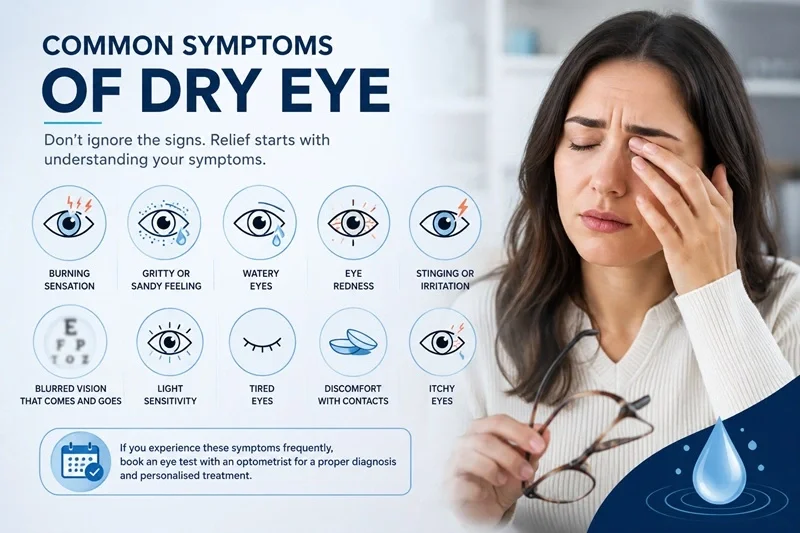
Many Australians experience symptoms without realising dry eye is the cause.
Common symptoms include:
Burning eyes
Stinging sensation
Gritty or sandy feeling
Itchy eyes
Blurred vision that improves after blinking
Watery eyes
Eye redness
Light sensitivity
Tired eyes
Difficulty wearing contact lenses
Eye fatigue while using computers
Fluctuating vision throughout the day
Many people are surprised that excessive watering can actually be a sign of dry eyes. This happens because irritated eyes produce reflex tears, which do not adequately lubricate the eye.
What Causes Dry Eyes?
Dry eye usually develops because of one or more underlying factors.
Meibomian Gland Dysfunction (MGD)
The most common cause.
The oil glands in the eyelids become blocked, causing tears to evaporate too quickly.
Ageing
Tear production naturally decreases with age, especially after 50.
Screen Time
Blinking decreases by almost 50% while using:
Computers
Phones
Tablets
Gaming devices
This increases tear evaporation.
Australian Climate
Australia's climate can contribute to dry eye through:
Air conditioning
Heating
Wind
Dust
Bushfire smoke
UV exposure
Low humidity
Contact Lens Wear
Long-term contact lens use may increase dryness.
Hormonal Changes
Common during:
Pregnancy
Menopause
Certain hormonal medications
Medical Conditions
Dry eye may be associated with:
Diabetes
Rheumatoid arthritis
Lupus
Thyroid disease
Sjögren's Syndrome
Rosacea
Medications
Several medicines may reduce tear production, including:
Antihistamines
Antidepressants
Blood pressure medications
Acne medications
Some contraceptives
Who Is Most at Risk?
You are more likely to develop dry eye if you:
Are over 50
Spend over six hours daily on digital devices
Wear contact lenses
Have allergies
Live in dry climates
Have autoimmune disease
Have previously had eye surgery
Wear eye makeup daily
Smoke
How Is Dry Eye Diagnosed?
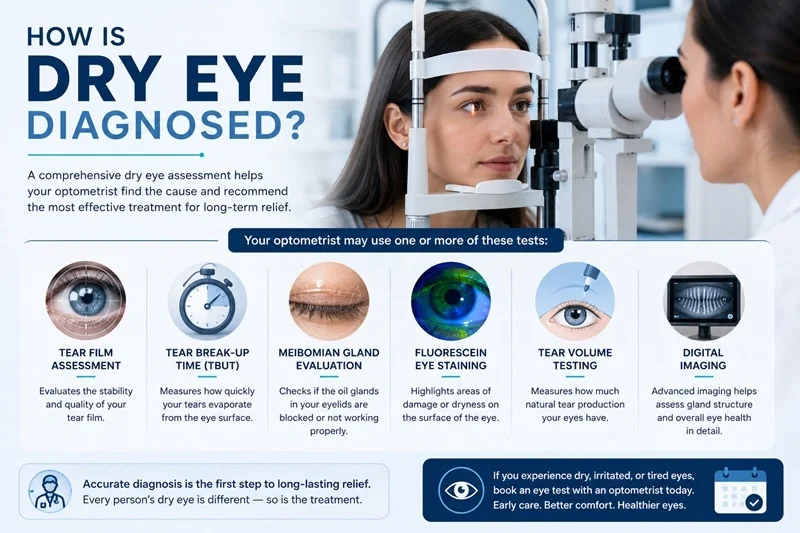
An optometrist performs several painless tests to determine the cause.
These may include:
Tear Film Assessment
Measures tear stability.
Tear Break-Up Time (TBUT)
Determines how quickly tears evaporate.
Meibomian Gland Evaluation
Checks whether the oil glands are blocked.
Fluorescein Eye Staining
Shows areas of damage on the eye's surface.
Tear Volume Testing
Measures tear production.
Digital Imaging
Some clinics use advanced imaging to assess gland health.
Understanding the underlying cause is essential because treatments differ depending on whether dry eye is caused by poor tear production, excessive evaporation, inflammation, or gland dysfunction.
Best Dry Eye Treatments Available in Australia
1. Artificial Tears
Usually the first treatment recommended.
Options include:
Preservative-free drops
Gel eye drops
Lubricating ointments
Long-lasting formulations
Preservative-free drops are generally recommended for people using eye drops multiple times a day.
2. Warm Compress Therapy
Applying heat helps unblock meibomian glands.
Benefits include:
Better oil flow
Reduced evaporation
Improved comfort
Reusable heated eye masks are often recommended.
3. Eyelid Hygiene
Cleaning the eyelids removes bacteria, debris, and excess oils.
Daily eyelid cleaning may significantly reduce symptoms.
4. Prescription Eye Drops
Some patients require anti-inflammatory medications prescribed by an optometrist or ophthalmologist.
These help reduce inflammation responsible for chronic dry eye.
5. IPL (Intense Pulsed Light)
One of the biggest advances in dry eye treatment.
IPL works by:
Improving meibomian gland function
Reducing inflammation
Decreasing abnormal blood vessels
Improving tear quality
Many Australian eye clinics now offer IPL therapy.
6. Meibomian Gland Expression
After warming the eyelids, blocked glands are gently cleared.
This improves the oil layer of the tears.
7. Punctal Plugs
Tiny plugs inserted into tear ducts help retain natural tears for longer.
Suitable for certain patients with reduced tear production.
8. Omega-3 Supplements
Some people benefit from increasing omega-3 intake, although evidence is mixed. Your eye care professional can advise whether supplementation is appropriate based on your overall health.
9. Environmental Changes
Simple adjustments include:
Using a humidifier
Reducing direct air conditioning
Wearing wraparound sunglasses outdoors
Taking regular screen breaks
10. Lifestyle Changes
Good habits include:
Staying hydrated
Getting enough sleep
Limiting smoking
Eating a balanced diet
Managing allergies
New and Emerging Dry Eye Treatments
Recent advances include:
Thermal pulsation therapy
Low-level light therapy (LLLT)
Radiofrequency treatment
Advanced gland imaging
Biological tear substitutes (for selected severe cases under specialist care)
These technologies are becoming increasingly available in specialised Australian clinics.
Can Dry Eye Be Cured?
Dry eye usually cannot be permanently cured, but it can often be managed successfully.
Most people achieve significant symptom improvement with the right combination of treatments and ongoing care.
Early treatment also helps reduce the risk of long-term damage to the eye surface.
What Happens If Dry Eye Is Left Untreated?
Untreated dry eye may lead to:
Chronic inflammation
Eye infections
Damage to the cornea
Reduced quality of vision
Difficulty wearing contact lenses
Persistent discomfort
Seeking treatment early often prevents complications.
Home Remedies That Can Help
Many people improve symptoms by:
Applying warm compresses daily
Practising eyelid hygiene
Drinking adequate water
Following the 20-20-20 rule during screen use
Wearing sunglasses outdoors
Using a humidifier
Avoiding cigarette smoke
Blinking consciously while using screens
Getting enough sleep
These strategies work best alongside professional advice rather than replacing it.
Dry Eye and Contact Lenses
Dry eye is common among contact lens wearers.
Helpful strategies include:
Daily disposable lenses (if appropriate)
Silicone hydrogel lenses
Rewetting drops approved for contact lenses
Limiting wearing time when symptoms flare
Regular contact lens reviews
Never use eye drops with contact lenses unless they are specifically labelled as compatible.
Dry Eye During Pregnancy and Menopause
Hormonal changes can alter tear production.
Symptoms may improve after pregnancy but can persist after menopause.
Discuss safe treatment options with your healthcare provider before using medicated eye drops during pregnancy or breastfeeding.
How Much Does Dry Eye Treatment Cost in Australia?
Costs vary depending on the treatment and clinic.
Typical expenses may include:
| Treatment | Estimated Cost |
|---|---|
| Initial dry eye assessment | $80–$250 |
| Artificial tears | $10–$40 |
| Heated eye mask | $20–$80 |
| Prescription eye drops | Varies |
| IPL treatment | $250–$500 per session |
| Punctal plugs | Several hundred dollars, depending on the procedure |
Some private health insurance policies may provide rebates for consultations or certain treatments. Check your level of cover with your insurer.
When Should You See an Optometrist?
Book an eye examination if you experience:
Persistent dryness
Frequent redness
Blurred vision
Burning eyes
Light sensitivity
Pain
Symptoms lasting more than a few weeks
Dryness that affects daily activities
A comprehensive assessment helps identify the underlying cause and ensures you receive the most effective treatment.
If you're searching for an eye care professional, explore the LocalEyez Optometrist Directory for clinics across Australia:
Finding the Right Eye Clinic in Australia
If you're looking for expert eye care, these guides can help you choose the right clinic:
These resources can help you compare clinics, understand available services, and make an informed choice.
Frequently Asked Questions
What is the most effective treatment for dry eyes?
The most effective treatment depends on the underlying cause. Many people benefit from preservative-free lubricating eye drops, warm compresses, eyelid hygiene, and treatments targeting meibomian gland dysfunction. Some cases require prescription medication or in-clinic procedures such as IPL.
Can dry eye go away permanently?
Most cases are chronic and require ongoing management rather than a permanent cure. However, symptoms can often be well controlled with the right treatment plan.
Is dry eye a serious condition?
It can become serious if left untreated. Persistent dry eye may damage the eye surface, reduce vision quality, and increase the risk of infection.
Which eye drops are best for dry eye?
Preservative-free lubricating eye drops are often recommended for frequent use. The best product depends on whether your dry eye is caused by reduced tear production, excessive evaporation, or another underlying issue.
Can too much screen time cause dry eyes?
Yes. Screen use reduces blinking frequency, allowing tears to evaporate more quickly and increasing dry eye symptoms.
Is IPL treatment worth it?
For people with meibomian gland dysfunction who do not respond to conventional treatment, IPL has shown promising results in improving symptoms and tear quality. Suitability should be determined by an eye care professional.
Can diet improve dry eye symptoms?
A balanced diet that includes healthy fats and adequate hydration may support overall eye health. Some individuals may benefit from omega-3 supplements, although evidence varies.
Should I see an optometrist or an ophthalmologist?
An optometrist is usually the first point of contact for dry eye assessment and management. If advanced medical or surgical care is required, they may refer you to an ophthalmologist.
Conclusion
Dry eye disease is more than an occasional inconvenience—it is a common condition that can affect comfort, productivity, and long-term eye health. Fortunately, Australians have access to a wide range of effective treatments, from simple lifestyle changes and lubricating eye drops to advanced therapies such as IPL and meibomian gland treatments.
If you're experiencing persistent dryness, burning, blurred vision, or irritation, don't ignore the symptoms. A comprehensive eye examination can identify the underlying cause and help you receive a personalised treatment plan that protects your vision and improves your quality of life.