
Bulk Billing Eye Tests in Australia: Who’s Eligible, What’s Covered & How to Find a Bulk Billing Optometrist
A bulk billing eye test in Australia is a comprehensive eye examination where the optometrist bills Medicare directly, meaning eligible patients pay no out-of-pocket consultation fee. Eligibility depends on Medicare rules, clinical needs, and examination frequency. Many Australians—including children, seniors, and people with eye conditions—can access fully bulk billed eye tests.
Bulk Billing Eye Tests in Australia: Who's Eligible & How to Find One
Your eyesight affects everything—from driving safely and working comfortably to reading, studying, and enjoying everyday life. Yet many Australians delay eye examinations because they worry about the cost.
The good news is that bulk billing eye tests make professional eye care affordable for millions of Australians through Medicare. If you're eligible, your consultation may cost nothing out of pocket, allowing you to receive a comprehensive eye examination without financial stress.
However, many people still ask:
Who actually qualifies?
Does everyone get free eye tests?
Are glasses included?
How often can you claim?
What if I need extra scans?
How do I find a bulk billing optometrist near me?
This guide answers every question while covering the latest Medicare rules, common misconceptions, and practical tips that many competing articles overlook.
What Is a Bulk Billing Eye Test?
A bulk billing eye test is an eye examination where the optometrist accepts the Medicare benefit as full payment.
Instead of paying the consultation fee yourself, the clinic submits the claim directly to Medicare.
If your consultation is fully bulk billed, you pay $0 for the standard Medicare-covered eye examination.
However, this only applies to eligible Medicare services—not necessarily additional diagnostic testing, specialty imaging, contact lens fittings, or eyewear.
Does Medicare Cover Eye Tests in Australia?
Yes.
Medicare covers comprehensive eye examinations performed by registered optometrists when they meet Medicare criteria.
A Medicare eye examination may include:
Vision testing
Eye health assessment
Prescription check
Eye pressure assessment (when clinically required)
Retinal examination
Cataract assessment
Macular degeneration screening
Glaucoma risk evaluation
Diabetic eye examination
Discussion of eye health and treatment options
The examination performed depends on your age, symptoms, medical history, and risk factors.
Who Is Eligible for Bulk Billing Eye Tests?
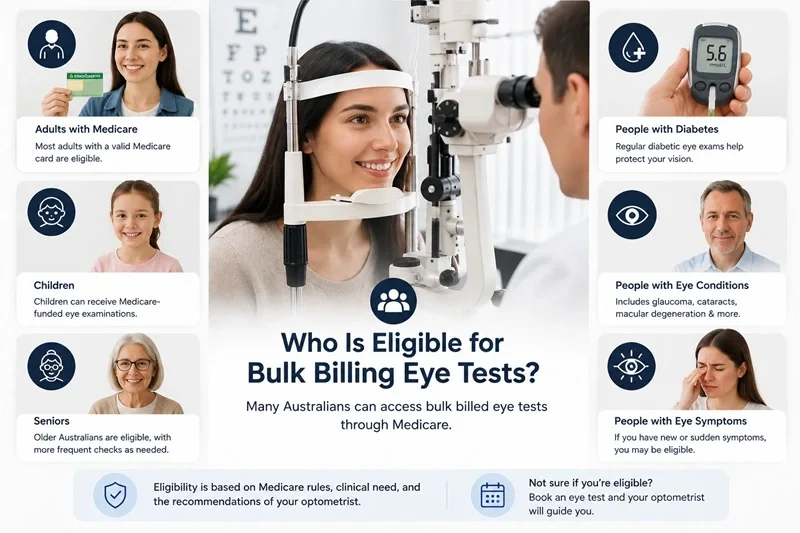
Most Australians with a valid Medicare card can receive Medicare-funded eye examinations.
Eligibility generally includes:
Adults with Medicare
Most adults qualify for routine Medicare-funded comprehensive eye examinations at approved intervals.
Children
Children are eligible for Medicare-funded eye examinations.
Regular eye checks are especially important because many childhood vision problems develop without obvious symptoms.
Children experiencing learning difficulties, headaches, eye turning, or poor concentration should have their vision assessed promptly.
Seniors
Older Australians often require more frequent monitoring because age increases the risk of:
Cataracts
Glaucoma
Macular degeneration
Diabetic eye disease
Many seniors receive Medicare-covered eye examinations according to clinical need.
People with Diabetes
Diabetes significantly increases the risk of vision loss.
Routine diabetic eye examinations help detect retinal damage early, often before symptoms appear.
People with Eye Diseases
Individuals diagnosed with conditions such as:
Glaucoma
Cataracts
Keratoconus
Macular degeneration
Retinal disorders
may qualify for examinations at shorter intervals based on Medicare guidelines.
People Experiencing Eye Symptoms
You don't always have to wait for your routine examination.
If you experience:
Sudden blurred vision
Eye pain
Flashes
Floaters
Double vision
Vision loss
you should arrange an eye examination immediately.
How Often Can You Get a Bulk Billed Eye Test?
This is one of the most searched questions—and one that many websites explain poorly.
The answer depends on several factors:
Routine Eye Examinations
Healthy adults usually qualify at standard Medicare intervals.
Earlier Examinations
You may be eligible sooner if you have:
New vision symptoms
Diabetes
Glaucoma
Cataracts
Eye injuries
Certain medical conditions
Clinical reasons determined by your optometrist
Your optometrist will determine whether an earlier Medicare-funded examination is appropriate.
What Isn't Covered by Bulk Billing?
This is where many patients become confused.
Although your consultation may be bulk billed, Medicare generally does not automatically cover:
Sunglasses
Contact lens fitting appointments
Some specialised retinal scans
OCT imaging (unless included by the practice)
Advanced diagnostic imaging
Dry eye procedures
Vision therapy
Always ask the clinic whether additional services involve extra costs.
Are Glasses Free After a Bulk Billed Eye Test?
No.
This is one of Australia's biggest misconceptions.
Bulk billing only covers the eligible eye examination.
You usually pay separately for:
Frames
Lenses
Lens upgrades
Blue-light coatings
Photochromic lenses
Progressive lenses
Contact lenses
Some government assistance programs may help eligible concession holders access affordable eyewear.
How to Find a Bulk Billing Optometrist Near You
Finding a clinic is easier than ever.
Look for practices that clearly advertise:
Medicare bulk billing
Comprehensive eye examinations
Diabetic eye care
Glaucoma assessments
Convenient appointment availability
You should also compare:
Patient reviews
Technology used
Opening hours
Parking
Weekend appointments
Accessibility
Languages spoken
Emergency appointment availability
For more detailed advice, read our guide on How to Find a Bulk Billing Optometrist Near You.
Bulk Billing vs Private Eye Care
Not every optometrist bulk bills every patient.
Some clinics:
Bulk bill everyone
Bulk bill only children
Bulk bill pensioners
Bulk bill concession card holders
Charge private consultation fees
Offer mixed billing
Understanding the difference helps avoid unexpected costs.
Questions to Ask Before Booking
Many articles forget this important step.
Before making an appointment, ask:
Do you bulk bill everyone?
Is my eye test covered by Medicare?
Will I have any out-of-pocket costs?
Are retinal scans included?
Is OCT imaging extra?
Are children's eye tests bulk billed?
Do you accept concession cards?
Can I book online?
How long will my appointment take?
These questions help prevent surprise fees.
Signs You Shouldn't Delay an Eye Test
Even if your previous examination was recent, book an appointment immediately if you notice:
Blurred vision
Sudden vision changes
Persistent headaches
Eye pain
Double vision
Flashes of light
New floaters
Difficulty reading
Night driving problems
Eye redness lasting several days
Early detection often prevents permanent vision loss.
Can You Choose Any Optometrist?
Yes.
As long as the clinic provides Medicare-funded eye examinations, you can usually choose whichever optometrist best suits your needs.
Factors worth considering include:
Experience
Advanced diagnostic equipment
Availability
Family-friendly services
Accessibility
Specialist referrals when required
What to Bring to Your Appointment
Being prepared makes your appointment smoother.
Bring:
Medicare card
Photo identification (if required)
Current glasses
Contact lenses
Sunglasses
Referral letter (if applicable)
Medication list
Details of eye symptoms
Previous eye reports (if available)
How Long Does a Bulk Billed Eye Test Take?
Most comprehensive eye examinations take approximately 20–45 minutes.
If additional testing is required due to glaucoma, diabetes, retinal disease, or complex vision problems, your appointment may take longer.
Can You Book Online?
Yes.
Many Australian optometry clinics now offer:
Online appointment booking
Same-day appointments
SMS reminders
Weekend availability
Evening appointments
Digital patient forms
Booking online is often the quickest way to secure a convenient appointment.
Why Regular Eye Tests Matter
Many serious eye diseases develop without pain or noticeable symptoms.
Regular eye examinations help detect:
Glaucoma
Cataracts
Diabetic retinopathy
Macular degeneration
Retinal tears
High blood pressure signs
Diabetes-related eye changes
Early diagnosis often leads to better treatment outcomes and helps preserve vision.
Choosing Comfortable Eyewear After Your Eye Test
Once you've had your eye examination, choosing the right frames is the next step. Comfort, fit, and quality materials all play an important role in how your glasses feel throughout the day.
Final Thoughts
Bulk billing eye tests remove one of the biggest barriers to maintaining healthy vision. With Medicare covering eligible eye examinations for many Australians, it's easier than ever to prioritise your eye health without worrying about consultation costs.
Understanding what's included, who qualifies, how often you can claim, and whether additional services attract fees helps you make informed decisions before booking. Whether you're arranging your child's first eye test, managing diabetes, or simply keeping up with routine vision care, regular eye examinations remain one of the most effective ways to detect eye conditions early and protect your sight for years to come.
Frequently Asked Questions
Are eye tests free with Medicare in Australia?
Eligible Medicare card holders can receive bulk billed eye examinations if the optometrist chooses to bulk bill the consultation. Additional services or products may incur separate costs.
How often can I have a bulk billed eye test?
The frequency depends on Medicare guidelines, your age, and your eye health. People with certain medical conditions or new symptoms may qualify for examinations sooner than routine intervals.
Do all optometrists offer bulk billing?
No. Some clinics bulk bill all patients, while others only bulk bill specific groups or charge private consultation fees. Always confirm when booking.
Are glasses included in bulk billing?
No. Bulk billing covers the eligible eye examination, but glasses, contact lenses, and most eyewear products are purchased separately.
Can children receive bulk billed eye tests?
Yes. Children with a valid Medicare card can generally access Medicare-funded eye examinations when clinically appropriate.
Can pensioners receive free eye tests?
Many pensioners receive bulk billed eye examinations, although individual clinic billing policies may vary.
Is OCT scanning included?
Not always. Some clinics include OCT imaging, while others charge an additional fee. Ask before your appointment.
Can I have an eye test if I wear contact lenses?
Yes. However, specialised contact lens fitting appointments may involve additional charges beyond the Medicare-funded eye examination.
Do I need a referral for a bulk billed eye test?
No. Most Australians can book directly with an optometrist without needing a GP referral.
What happens if my optometrist finds an eye disease?
If a condition requiring specialist care is detected, your optometrist may refer you to an ophthalmologist for further assessment and treatment.